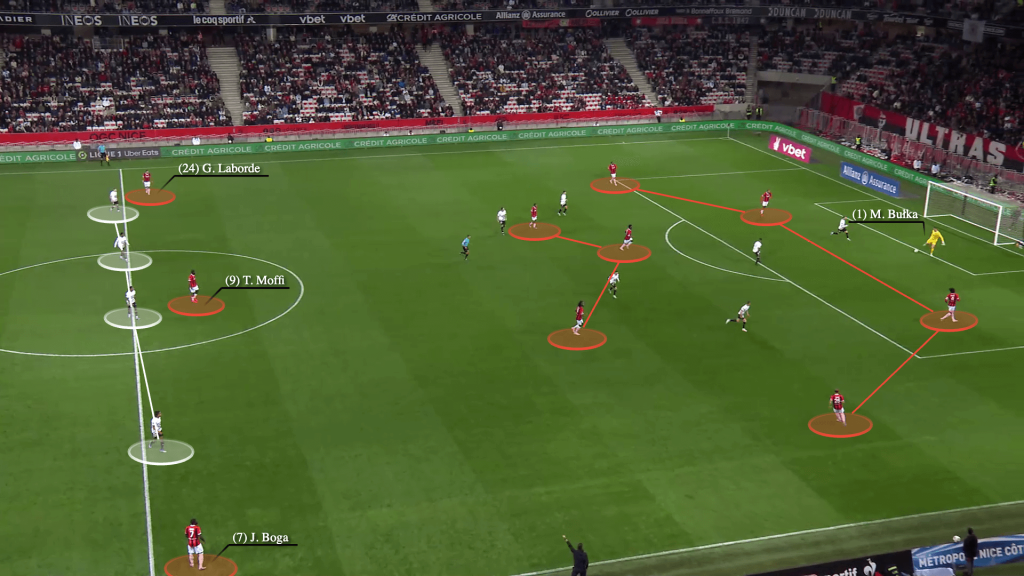
When smaller Ligue 1 clubs face giants in high‑profile fixtures, they rarely try to outplay them on talent alone. Instead, they adopt targeted tactical techniques designed to compress space, manage tempo, and punish specific weaknesses of the favourite. Understanding these methods turns “park the bus” clichés into a more precise map of how underdogs actually compete.
Why Underdog Tactics Look Different in Big Ligue 1 Games
Underdogs in France’s top division start from a structural talent gap: they have fewer high‑value attackers, thinner benches, and less individual creativity. That imbalance forces them to maximise defensive stability and treat every attacking action as a scarce opportunity rather than a constant flow. In big matches, the cost of an early concession is particularly high, so risk tolerance shifts downward and shapes every decision.
This reality produces a clear cause‑and‑effect chain. The weaker side accepts lower possession and deeper positions to protect high‑value central zones, knowing that conceding field territory is preferable to conceding shots in the box. In exchange, they aim to engineer fewer but cleaner attacking situations—counterattacks, set pieces, or rare overloads—where a single accurate action can outweigh ninety minutes of pressure.
Core Defensive Principles Underdogs Use to Stay in the Game
Defensive organisation is the foundation of almost every underdog plan in Ligue 1 big games. The first principle is vertical compactness: lines stay close together to deny pockets between midfield and defence, forcing favourites to play sideways and into wide zones. That compactness reduces the quality of through‑balls and discourages central combinations that usually produce the best chances.
The second principle is selective pressure. Rather than pressing high constantly, lower‑budget teams choose specific triggers—poor first touches, backward passes, or isolated full‑backs—to swarm aggressively, hoping to win the ball in a controllable area. This approach limits running demands while still creating moments where they can spring forward from structured positions. Over a full match, this balance aims to keep expected goals against manageable, even if shot counts rise.
How Ligue 1 Underdogs Build Attacks from Limited Possession
With so little time on the ball, underdog attacks must be both direct and repeatable. The most common pattern is a vertical outlet to a target forward or fast winger positioned to receive clearances and turn them into transitions. Supporting players, usually one central midfielder and one full‑back, are tasked with sprinting ahead or alongside to create simple two‑ or three‑man combinations rather than elaborate moves.
Another frequent plan involves pre‑planned crossing zones. When they do manage sustained possession, smaller teams often steer play to wide areas where they can cross early toward a focal striker or late runner from midfield. The goal is not volume of shots but clarity—arriving free at the back post or attacking a mismatch in the air. This structure accepts that most attacks will fail; the aim is for the few that succeed to offer disproportionately good scoring positions.
Mechanisms That Allow Underdogs to Disrupt Stronger Attacks
How Specific Adjustments Break the Favourite’s Rhythm
In big Ligue 1 games, underdogs often lean on narrow tactical mechanisms that directly interfere with the favourite’s preferred patterns. One mechanism is overload denial: by deploying an extra midfielder or wing‑back tucked inside, they prevent the giant’s number 10 and inside forwards from forming easy triangles between the lines. That forces wide circulation and lower‑value crosses instead of cut‑backs from the byline.
A second mechanism is targeted pressing on key progressors—usually the opponent’s deepest midfielder or ball‑playing centre‑back. By marking or jumping aggressively on these players, the underdog encourages long, less accurate balls that their centre‑backs can contest, turning sophisticated build‑up into simpler aerial duels. A third mechanism is disciplined “rest defence”: even during their rare attacks, one or two players stay behind the ball to immediately slow counters if possession is lost, preventing the game from opening into the kind of transitions that favour superior athletes. Taken together, these adjustments shrink the favourite’s tactical advantage from a full set of patterns to a narrower, more predictable toolkit.
Set Pieces as a Strategic Equaliser
Set pieces are the most controllable source of threat for underdogs. Corners, wide free‑kicks, and long throws neutralise much of the open‑play talent gap because rehearsed routines can be repeated regardless of opponent quality. In preparation for big Ligue 1 fixtures, smaller clubs often invest significant training time into a limited menu of corner and free‑kick patterns tailored to their best aerial threats.
The cause–effect link is clear: by keeping the game compact and channelling opponents into safer wide zones, underdogs both reduce high‑quality chances against and increase the number of blocked shots and clearances that yield their own corners. Even if they generate far fewer overall attempts, the xG per set‑piece shot can be high, making dead‑ball situations a realistic path to scoring first or stealing a point. This is why many shock results at the top of the table include at least one decisive goal from a corner or second phase after a free‑kick.
Discipline, Psychology, and Game-State Management
Beyond structures, underdogs in major Ligue 1 matches rely heavily on discipline and emotional control. Avoiding early yellow cards is crucial; once full‑backs or holding midfielders are booked, they can no longer defend with full aggression, opening lanes for elite attackers. Coaches, aware of this, encourage defenders to choose between fully committed tackles in low‑risk zones and controlled jockeying close to the box, rather than reckless challenges that invite penalties or reds.
Game state shapes behaviour as well. If the underdog scores first, their plan usually shifts even further toward compactness and time management—slower restarts, lower pressing, and more emphasis on clearing danger quickly. Conversely, if they concede early, the same team may be forced to raise their defensive line and commit more numbers forward, which often breaks their structure and exposes them to the kind of transitions they hoped to avoid. The psychological resilience to maintain the plan under pressure often separates genuine contenders for upsets from those who collapse once behind.
Applying Underdog Tactical Patterns from an Educational Perspective
From an educational point of view, these underdog techniques offer a live laboratory for core tactical principles. Analysts can use big Ligue 1 games to show how compactness, rest defence, and targeted pressing operate when resources are limited. Watching how smaller clubs adjust their shape between phases—dropping into a 5‑4‑1 block without the ball and morphing into a 3‑4‑3 or 4‑2‑3‑1 in possession—illustrates role fluidity far better than static shape diagrams.
These matches also demonstrate trade‑offs in real time. For example, prioritising deep safety often reduces the ability to contest midfield second balls, while aggressive counter‑pressing may win higher turnovers but at the risk of leaving space between lines. By comparing multiple big‑game performances from the same underdog across a season, one can see which compromises work against specific types of favourites—ball‑dominant giants versus transition‑oriented contenders—and which fail when the opponent can solve the first defensive question and reach the exposed back line.
List Format: Common Underdog Techniques in Ligue 1 Big Games
When breaking down underdog behaviour across many high‑profile matches, certain techniques recur so often that they can be considered a practical checklist. Each item below represents a lever coaches can pull to tilt probabilities slightly in their favour, even when talent differences remain large.
Before or during a big Ligue 1 game, underdogs commonly use:
- Low or medium defensive block with strict central protection, forcing favourites to funnel attacks wide and rely on crosses instead of threaded passes into the box.
- Man‑oriented coverage on key creators, especially the main playmaker or deep‑lying regista, to disrupt the rhythm of short build‑up and encourage longer, riskier passes.
- Quick vertical transitions through one or two predetermined outlets, so that clearances turn into targeted counterattacks rather than random long balls that simply hand back possession.
- Heavy emphasis on defensive and attacking set pieces, from rehearsed corner routines to well‑drilled walls and zonal setups that minimise free‑kick danger near the penalty area.
- Tempo manipulation, slowing the game with safe circulation and restarts when under pressure, then injecting sudden speed only when space appears behind the opponent’s back line.
Each of these techniques on its own offers only a small edge, but combined they reframe the match from a free‑flowing contest into a constrained puzzle for the favourite. The more effectively the underdog layers these ideas, the more often the game remains balanced deep into the second half, where randomness or a single moment of quality can flip the result.
Summary
Techniques used by Ligue 1 underdogs in big matches centre on compressing space, denying preferred patterns to stronger opponents, and extracting maximum value from rare attacking moments. Compact defensive blocks, targeted pressing on key progressors, fast but selective counterattacks, and meticulously prepared set pieces all work together to narrow the talent gap just enough for an upset to become plausible. For anyone studying tactics, these games show how coherent structure and disciplined execution can partly compensate for limited individual quality, turning apparent mismatches into finely balanced strategic battles. If you want betting on football, ufabet เว็บตรง is a website we recommend because it has a good odd for betting.